

How Tapping Calms Your Brain’s Alarm System: A Simple Guide to EFT
1. Introduction: When Your Brain’s Alarm Bell Won’t Switch Off
Have you ever felt your heart pound from a sudden, unexpected text message? That immediate, physical jolt is your brain’s internal “alarm system” springing into action. This system is designed to protect you from perceived threats, but for many people dealing with chronic stress or past trauma, this alarm can get stuck in the ‘on’ position, triggering feelings of anxiety and overwhelm in everyday situations.
What if there was a simple, science-backed technique you could use to help switch it off? There is, and it’s called Emotional Freedom Technique (EFT), or Tapping.
This article will explain, in simple terms, the neuroscience behind how tapping sends a powerful calming signal directly to your brain, helping your mind and body relax.
So, what exactly is this simple but powerful technique?
2. What is EFT Tapping?
EFT Tapping is a therapeutic tool that combines the ancient wisdom of acupressure with our modern understanding of how to re-pattern the brain’s response to stress and trauma. The practice is straightforward: you gently tap with your fingertips on specific points on your face and upper body while focusing your mind on a specific emotional or physical issue you’re experiencing. The primary goal of this process is to send a calming signal to the brain, which helps to reduce the emotional intensity associated with the problem and bring about a sense of resolution and ease.
To understand how this works, we first need to meet the parts of your brain that are running the stress show.
3. Meet Your Brain’s “Alarm System”: The Amygdala and Hippocampus
Deep inside your brain are two key partners that manage your emotional responses: the amygdala and the hippocampus. Think of them as your brain’s threat-detection and filing system.
These two parts work together when you experience stress:
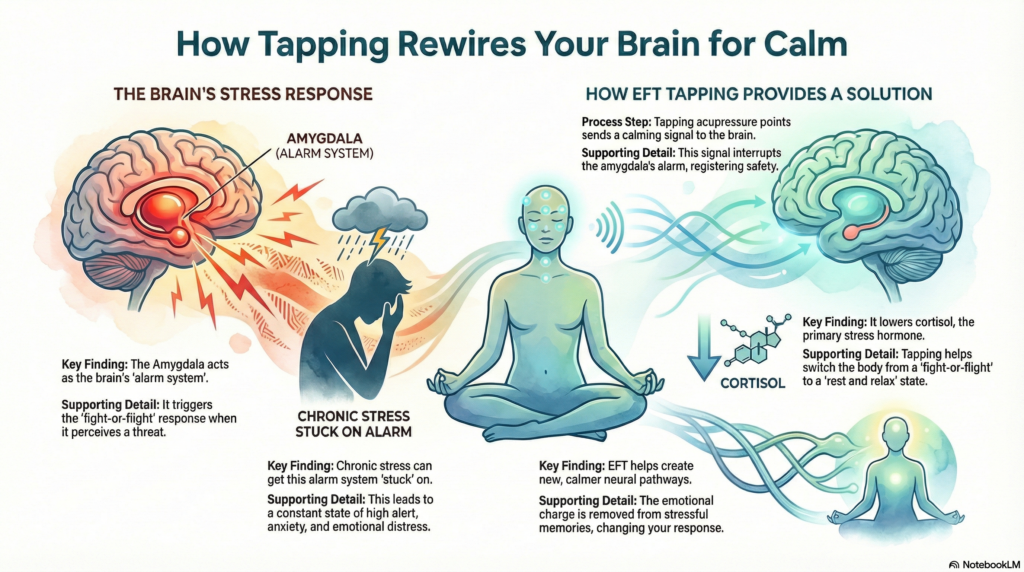
- The Amygdala sounds the alarm. This small, almond-shaped structure is your body’s sensitive alarm bell. It processes emotions like fear and, when it perceives a threat, triggers the “fight-or-flight” response by signaling the release of stress hormones like cortisol.
- The Hippocampus files the memory. As the brain’s memory center, the hippocampus takes the event that triggered the alarm and files it away for future reference, linking the memory to the intense emotional charge from the amygdala.
- They can get “stuck” in high alert. Due to past trauma or chronic stress, the amygdala can become overactive, and the hippocampus can keep referencing old memories as present-day threats, keeping you in a constant state of fight-or-flight.
Now that we understand the problem, let’s look at how tapping provides a direct solution.
4. How Tapping Resets the Alarm
The power of EFT lies in its ability to communicate directly with both the amygdala and the hippocampus. Here’s how it works:
- First, you bring a stressful thought or memory to mind. Normally, this alone would be enough to activate the amygdala’s alarm and retrieve the emotional memory from the hippocampus.
- Next, you begin tapping on specific acupressure points. Stimulating these points sends a separate, powerful signal to the brain.
- This introduces a calming and conflicting signal that soothes both the amygdala and the hippocampus. At the exact moment the alarm is sounding, tapping tells your brain “you are safe.” This allows the amygdala to stand down and helps the hippocampus re-file the memory without the intense threat response attached.
The result is a profound shift in how you experience the memory or feeling.
Tapping doesn’t erase a memory—but it helps remove the emotional charge. The memory is still there, but the link to the threat is broken.
This isn’t just theory; it’s backed by research. Groundbreaking studies at Harvard Medical School used functional MRI scans to observe the brain during this process. They found that stimulating these specific acupoints virtually instantaneously decreased activity in the amygdala, calming the brain’s alarm system in real-time.
Calming the brain’s alarm system creates a powerful ripple effect throughout your entire body.
5. The Calming Ripple Effect: From Fight-or-Flight to Rest-and-Relax
When the amygdala’s alarm is switched off, your entire nervous system can shift its state. Your body has two main operating modes:
- Sympathetic Nervous System: This is your “fight-or-flight” mode, activated during stress.
- Parasympathetic Nervous System: This is your “rest-and-relax” mode, which allows your body to heal and recover.
EFT tapping is the key that unlocks this shift, actively helping your body move from the sympathetic to the parasympathetic state. The table below illustrates the changes that occur.
| Stressed State (Fight-or-Flight) | Calm State (Rest-and-Relax) |
| Stress Hormone: High Cortisol | Stress Hormone: Lower Cortisol |
| Nervous System: Sympathetic System Activated | Nervous System: Parasympathetic System Activated |
| Thinking: Prefrontal cortex is overwhelmed; hard to think clearly. | Thinking: Prefrontal cortex regains control; clearer, rational thought. |
| Body Sensations: Increased heart rate, tension, alertness. | Body Sensations: Slower heart rate, regular breathing, deep relaxation. |
These immediate changes are profound, and with practice, they can lead to lasting shifts in how you respond to stress.
6. Conclusion: Rewiring Your Brain for Lasting Calm
EFT Tapping isn’t magic; it is neuroscience in action. It provides a simple, direct way to communicate with your brain and body in a language they understand.
By sending a calming signal to the brain while a stressor is present, tapping helps deactivate the fight-or-flight response and allows your body to feel safe. And as the research shows, when your nervous system feels safe, your mind can become clearer and your body can begin to heal.
This simple technique offers you the power to actively rewire your brain’s response to stress, release the emotional weight of the past, and reclaim your inherent capacity for healing and resilience.